
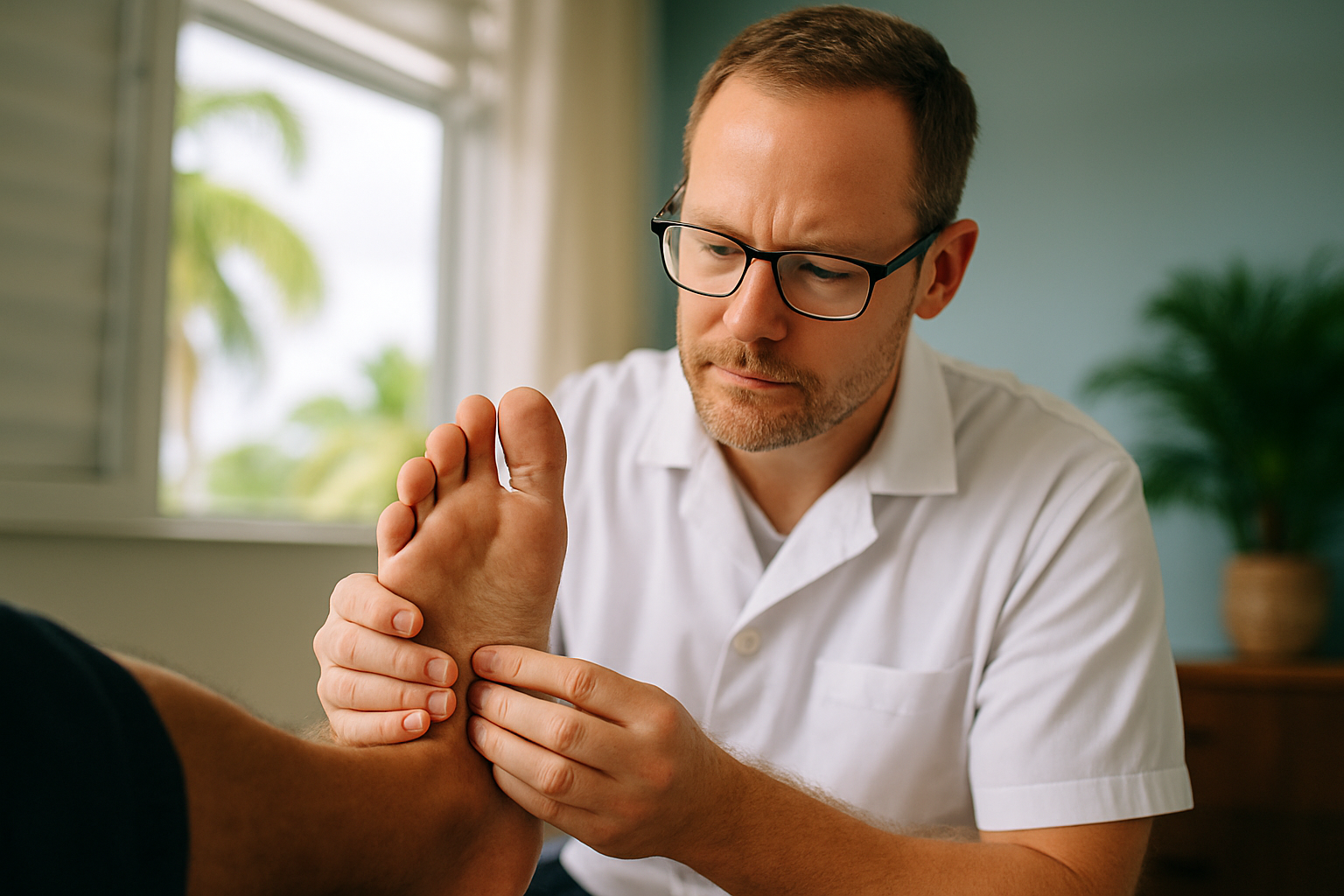
Athlete’s foot, or tinea pedis, is a common fungal infection that thrives in warm, moist environments—conditions that are prevalent in Holetown, Barbados. The combination of high humidity and elevated temperatures creates an ideal breeding ground for the fungi responsible for this condition. Understanding how to prevent and treat athlete’s foot is essential for maintaining healthy feet in such climates.
In this comprehensive guide, we’ll explore effective strategies to prevent and treat athlete’s foot, with a focus on the unique challenges posed by humid environments like Holetown.
Athlete’s foot is caused by dermatophyte fungi that infect the skin of the feet, particularly between the toes. Symptoms include itching, burning, redness, peeling skin, and, in severe cases, blisters or ulcers. The infection is highly contagious and can spread through direct contact with contaminated surfaces or personal items.
In humid climates, the risk of developing athlete’s foot increases due to constant exposure to moisture, which promotes fungal growth. Activities such as walking barefoot in public areas like pools, gyms, and communal showers further elevate this risk.
Preventing athlete’s foot requires a proactive approach, especially in humid environments. Here are key strategies:
– **Daily Washing and Drying:** Wash your feet daily with soap and water, ensuring you clean between the toes. After washing, dry your feet thoroughly, paying special attention to the spaces between your toes. Moisture left on the skin can create an environment conducive to fungal growth.
– **Use Antifungal Powders:** Applying antifungal powders can help keep your feet dry and prevent fungal infections.
– **Breathable Materials:** Opt for shoes made from natural materials like leather or canvas, which allow air circulation and reduce moisture buildup.
– **Proper Fit:** Avoid tight-fitting shoes that can trap moisture and create friction. Ensure your footwear fits well and provides adequate ventilation.
– **Moisture-Wicking Socks:** Wear socks made from moisture-wicking materials to keep your feet dry. Change socks regularly, especially if they become damp.
– **Wear Protective Footwear:** In communal areas such as pools, gyms, and showers, always wear sandals or flip-flops to minimize direct contact with potentially contaminated surfaces.
– **Avoid Sharing Personal Items:** Do not share towels, shoes, or socks with others, as this can facilitate the spread of fungal infections.
– **Keep Feet Dry:** After activities that cause sweating, such as exercise, dry your feet promptly. If possible, remove shoes and socks to allow your feet to air out.
– **Alternate Footwear:** Rotate between different pairs of shoes to give each pair time to dry out completely before wearing them again.
If you develop athlete’s foot, prompt treatment is crucial to prevent the infection from worsening or spreading.
– **Topical Antifungal Medications:** Creams, sprays, or powders containing active ingredients like clotrimazole, miconazole, or terbinafine are effective in treating mild cases of athlete’s foot. Apply the medication as directed, usually for several weeks, even if symptoms improve earlier.
– **Oral Antifungal Medications:** For more severe or persistent infections, a healthcare provider may prescribe oral antifungal medications. These are typically used when topical treatments are ineffective.
– **Keep Feet Clean and Dry:** Continue practicing good foot hygiene during treatment to support healing and prevent reinfection.
– **Avoid Scratching:** Resist the urge to scratch affected areas to prevent further irritation or secondary bacterial infections.
If over-the-counter treatments do not resolve the infection within a few weeks, or if the infection is severe, it’s important to consult a podiatrist. Podiatry International in Holetown offers comprehensive foot and ankle care, including the treatment of fungal infections like athlete’s foot. Located at Sandy Crest Medical Centre in Sunset Crest, St. James, the clinic provides personalized treatment plans tailored to individual needs. [1]
**Q: How prevalent is athlete’s foot in Holetown, Barbados?**
A: While specific local statistics may not be readily available, the warm and humid climate in Holetown creates conditions that are conducive to fungal infections like athlete’s foot. Residents and visitors should be vigilant in practicing preventive measures.
**Q: Are there specific treatments available in Holetown for athlete’s foot?**
A: Yes, Podiatry International in Holetown offers treatments for athlete’s foot, including topical and oral antifungal medications, as well as preventive care advice. The clinic focuses on conservative, evidence-based treatments to reduce pain and improve mobility. [1]
**Q: Can athlete’s foot lead to more serious complications if left untreated?**
A: Yes, untreated athlete’s foot can lead to complications such as secondary bacterial infections, spread of the fungus to other parts of the body, and chronic foot issues. It’s important to address the infection promptly.
**Q: How can I prevent athlete’s foot if I frequently use public pools and gyms in Holetown?**
A: To prevent athlete’s foot in communal areas, always wear protective footwear like sandals or flip-flops, avoid sharing personal items, and ensure your feet are clean and dry after exposure to such environments.
**Q: Is athlete’s foot contagious, and how can I avoid spreading it to family members?**
A: Athlete’s foot is highly contagious. To prevent spreading it to family members, avoid sharing towels, shoes, or socks, and maintain good foot hygiene. If you have an active infection, keep your feet covered and avoid walking barefoot in shared spaces.
– **Maintain Good Foot Hygiene:** Regular washing and thorough drying of feet are essential in preventing athlete’s foot.
– **Choose Breathable Footwear:** Opt for shoes and socks that allow air circulation to keep feet dry.
– **Protect Feet in Public Areas:** Always wear protective footwear in communal spaces to reduce the risk of infection.
– **Seek Prompt Treatment:** At the first sign of athlete’s foot, begin treatment with appropriate antifungal medications.
– **Consult Professionals When Needed:** If over-the-counter treatments are ineffective, consult a podiatrist for personalized care.
– **Prevent Recurrence:** Continue preventive measures even after treatment to avoid reinfection.
– **Be Aware of Local Resources:** Podiatry International in Holetown offers specialized care for foot and ankle conditions, including athlete’s foot.
While we aim for accuracy, please verify details for your specific situation. For personalized advice and to discuss how these insights apply to your specific needs, we would love to chat with you directly.
If you’re experiencing symptoms of athlete’s foot or have concerns about foot health, Podiatry International can help evaluate your specific situation. Contact us at (246) 266-3668 to schedule an appointment at our Holetown clinic.