
Imagine slipping into your favorite pair of shoes, only to be met with a sharp, nagging pain on your toe or the ball of your foot. This discomfort is often due to corns or calluses—common foot ailments that, while not life-threatening, can significantly impact your daily activities and quality of life. For residents and visitors in Holetown, Barbados, understanding these conditions and their treatments is essential for maintaining optimal foot health.
Corns and calluses are thickened areas of skin that develop as a protective response to repeated friction or pressure. While they serve as the body’s natural defense mechanism, they can become problematic when they cause pain or discomfort.
Corns are small, circular areas of thickened skin that typically form on the tops or sides of toes. They often develop due to pressure from ill-fitting shoes or from toes rubbing against each other. Corns can be hard or soft, with soft corns usually appearing between the toes where moisture keeps them pliable. These lesions can be quite painful, especially when pressure is applied.
Calluses are larger, more diffuse areas of thickened skin that commonly develop on the soles of the feet, particularly under the heels or balls. They result from repeated pressure or friction, often due to walking barefoot, wearing high heels, or engaging in activities that put stress on the feet. Unlike corns, calluses are usually painless but can become uncomfortable if they grow too thick.
Several factors contribute to the development of corns and calluses:
– **Improper Footwear:** Shoes that are too tight, too loose, or have high heels can increase pressure on certain areas of the foot.
– **Abnormal Foot Mechanics:** Gait abnormalities or structural issues like bunions can lead to uneven weight distribution.
– **High Activity Levels:** Athletes or individuals who spend long hours on their feet are more prone to developing these conditions.
For those in the Holetown area, professional podiatric care is accessible and tailored to address corns, calluses, and other skin irritations effectively.
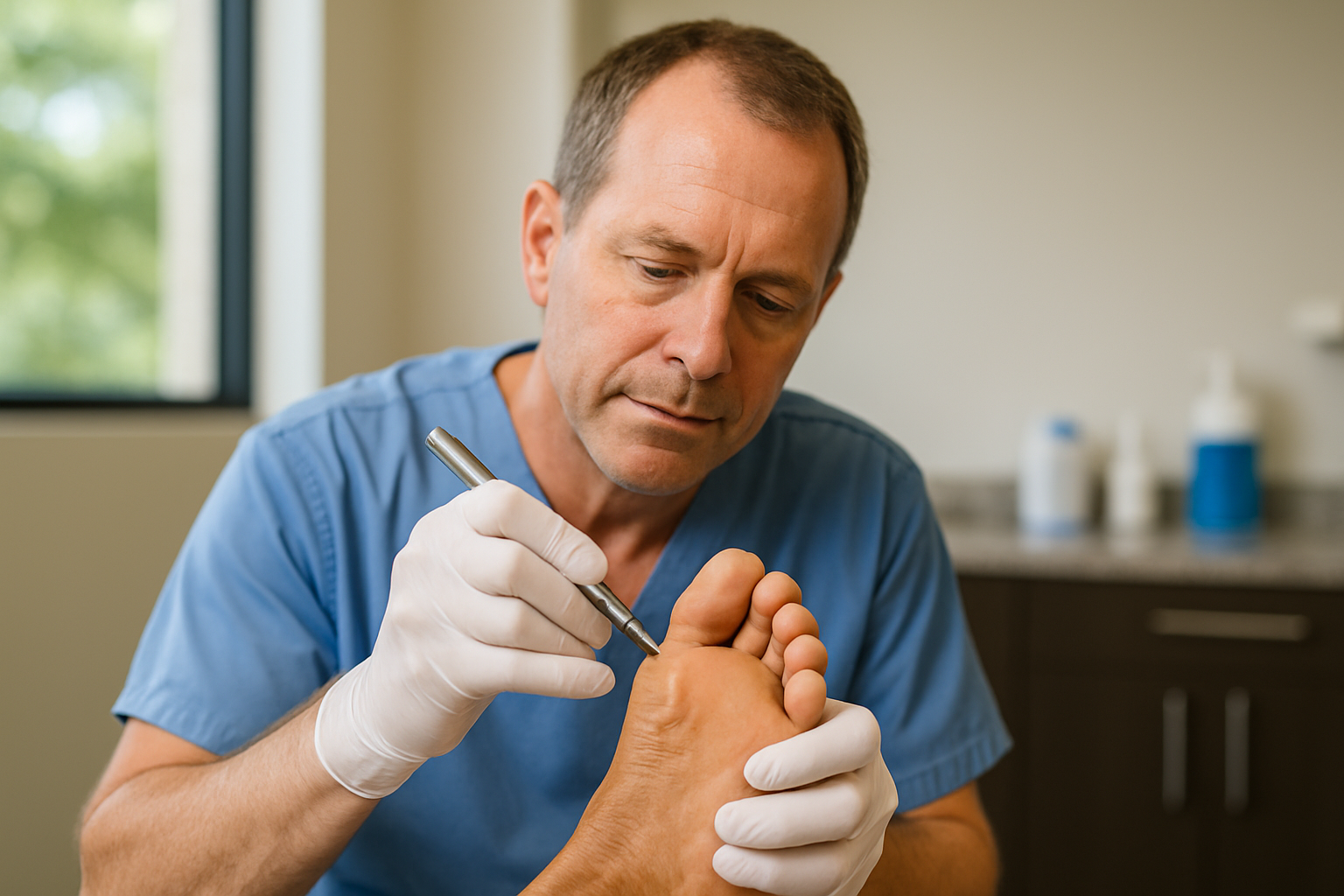
A podiatrist can safely remove the thickened skin using sterile instruments, providing immediate relief from discomfort. This procedure should only be performed by a qualified professional to prevent complications.
Custom-made shoe inserts can redistribute pressure across the foot, preventing the recurrence of corns and calluses. Podiatry International in Holetown offers custom biomechanical orthotics tailored to individual needs. [1]
For stubborn skin conditions, cold laser therapy is a non-invasive treatment that promotes healing and reduces inflammation. This advanced therapy is available at Podiatry International’s Holetown clinic. [1]
This treatment uses targeted pressure waves to heal chronic heel and arch pain, addressing underlying issues that may contribute to the formation of corns and calluses. It’s another innovative service provided locally. [1]
While professional treatments are effective, incorporating preventive measures and proper home care can significantly reduce the risk of developing corns and calluses.
Wearing well-fitting shoes with adequate toe room and cushioning can prevent excessive pressure on the feet. Avoid high heels and shoes with narrow toe boxes.
Keep feet clean and moisturized to maintain skin elasticity. After bathing, gently exfoliate thickened skin with a pumice stone.
Use non-medicated pads or cushions to protect areas prone to friction. Ensure these pads do not increase pressure on other parts of the foot.
If corns or calluses become painful, show signs of infection (such as redness, warmth, or pus), or if you have diabetes or circulatory issues, it’s crucial to consult a podiatrist. Podiatry International in Holetown offers comprehensive foot care services to address these concerns. [2]
**Q: How can I tell the difference between a corn and a callus?**
A: Corns are typically smaller, painful, and have a hard center surrounded by inflamed skin, often forming on non-weight-bearing parts of the foot. Calluses are larger, less sensitive, and develop on weight-bearing areas.
**Q: Are over-the-counter treatments effective for corns and calluses?**
A: While some over-the-counter treatments can provide relief, they may not address the underlying cause. It’s advisable to consult with a podiatrist for a comprehensive treatment plan.
**Q: Can corns and calluses lead to more serious foot problems?**
A: If left untreated