
Imagine walking along the beautiful beaches of Holetown, Barbados, only to find that each step brings discomfort or fatigue. For many residents and visitors, this scenario is all too familiar due to a common condition known as flat feet, or pes planus. This condition not only affects foot structure but also has significant implications for your overall gait and posture.
Flat feet occur when the arches of the feet collapse, causing the entire sole to come into complete or near-complete contact with the ground. This can be a congenital condition or develop over time due to factors such as aging, injury, or obesity. While some individuals with flat feet experience no symptoms, others may suffer from pain, swelling, and fatigue in the feet and lower legs.
In Holetown, Barbados, the warm climate and active lifestyle can exacerbate the discomfort associated with flat feet. Engaging in activities like walking on uneven terrain or participating in sports without proper foot support can lead to increased strain on the feet.
The biomechanics of flat feet significantly affect gait patterns. Individuals with flat feet often exhibit:
– **Increased Rearfoot Eversion:** The heel bone tilts inward, leading to overpronation during walking.
– **Forefoot Abduction:** The front part of the foot points outward, altering the natural alignment.
– **Reduced Arch Stiffness:** A lack of arch support can result in decreased shock absorption.
These alterations can lead to compensatory movements in the knees, hips, and lower back, potentially causing discomfort or injury over time. A study published in *Clinical Biomechanics* found that individuals with flat feet exhibited distinct gait patterns, including shorter stride lengths and prolonged stance phases, which may contribute to increased energy expenditure and fatigue. [1]
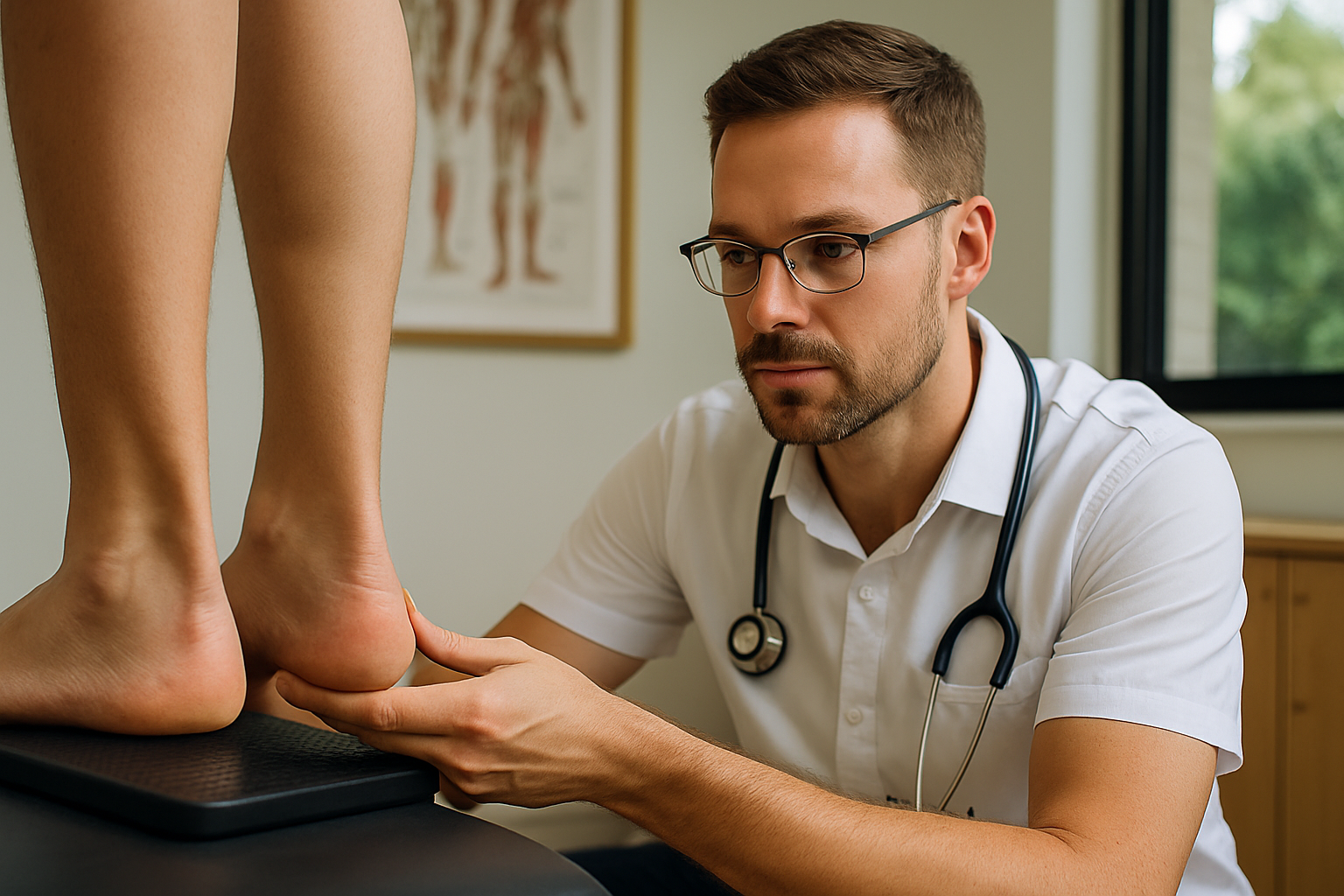
Proper assessment is crucial for determining the severity of flat feet and planning appropriate interventions. Podiatrists in Holetown, Barbados, commonly perform:
– **Visual Inspection:** Observing the foot’s structure and alignment.
– **Gait Analysis:** Evaluating walking patterns to identify biomechanical abnormalities.
– **Imaging Studies:** Utilizing X-rays or other imaging modalities to assess bone structure.
Early detection through these assessments can prevent the progression of symptoms and the development of related musculoskeletal issues.
Addressing flat feet involves a combination of conservative treatments aimed at alleviating discomfort and improving function. Podiatry International in Holetown offers several interventions:
– **Custom Orthotics:** Individually crafted inserts that provide arch support and correct biomechanical misalignments.
– **Shockwave Therapy:** A non-invasive treatment that uses pressure waves to stimulate healing in chronic heel and arch pain.
– **Cold Laser Therapy:** Advanced treatment for stubborn fungal nails, promoting healthy nail growth.
These treatments are tailored to each individual’s needs, ensuring optimal outcomes. For instance, custom orthotics have been shown to effectively reduce pain and improve stability in individuals with flat feet. [2]
In addition to clinical interventions, certain lifestyle changes can help manage flat feet:
– **Appropriate Footwear:** Wearing shoes with adequate arch support and cushioning.
– **Weight Management:** Maintaining a healthy weight to reduce stress on the feet.
– **Strengthening Exercises:** Engaging in exercises that strengthen the foot and ankle muscles.
Implementing these measures can enhance foot function and prevent the progression of symptoms.
Residents and visitors in Holetown should be aware of local factors that may influence foot health:
– **Climate:** The warm, humid environment can affect footwear choices and foot hygiene.
– **Terrain:** Walking on sandy beaches or uneven surfaces can increase strain on the feet.
– **Healthcare Access:** Podiatry International, located at Sandy Crest Medical Centre, offers specialized foot care services tailored to the needs of the Holetown community.
Being mindful of these factors and seeking appropriate care can significantly improve quality of life.
**Q: How do I know if I have flat feet?**
A: Common signs include foot pain, especially in the arch or heel, swelling along the inside of the ankle, and difficulty standing on tiptoe. A podiatrist can perform a thorough assessment to confirm the diagnosis.
**Q: Are custom orthotics necessary for all individuals with flat feet?**
A: Not always. The need for custom orthotics depends on the severity of the condition and the presence of symptoms. A podiatrist can determine the most appropriate treatment plan.
**Q: Can flat feet lead to other health issues?**
A: Yes, if left unaddressed, flat feet can contribute to problems in the knees, hips, and lower back due to altered biomechanics.
**Q: Is surgery required to correct flat feet?**
A: Surgery is typically considered only when conservative treatments fail to relieve symptoms. Most individuals find relief through non-invasive interventions.
**Q: How can I prevent flat feet from worsening?**