
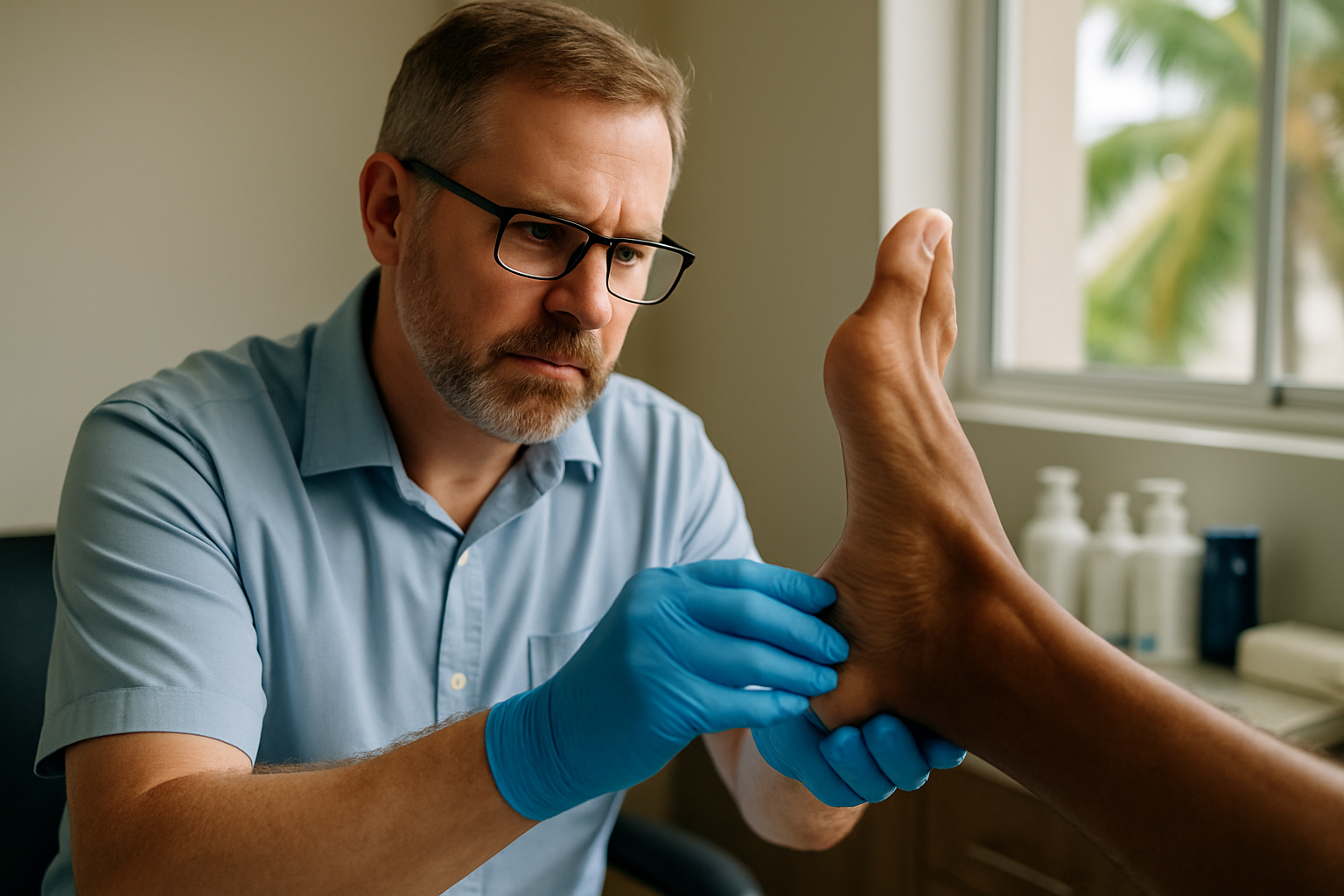
Imagine waking up one morning in Holetown, Barbados, with a sharp pain in your heel that makes every step a challenge. You might dismiss it as a minor issue, perhaps from walking on the beach or wearing unsupportive sandals. However, this discomfort could be an early sign of plantar fasciitis, a condition that, if left unaddressed, can lead to chronic pain and mobility issues. This scenario underscores the critical importance of expert diagnostics in maintaining foot and ankle health.
In the Holetown (Barbados), St. Vincent, St. Lucia, and Grenada area, residents often lead active lifestyles, enjoying the natural beauty and outdoor activities the Caribbean offers. This active lifestyle, while beneficial, can sometimes lead to foot and ankle issues that require professional attention. Understanding the role of expert diagnostics is essential in preventing minor discomforts from escalating into serious health concerns.
**The Complexity of Foot and Ankle Anatomy**
The human foot and ankle are intricate structures comprising 26 bones, 33 joints, and over 100 muscles, tendons, and ligaments. This complexity allows for a wide range of movements but also makes the area susceptible to various conditions. Common issues include plantar fasciitis, bunions, Achilles tendonitis, and diabetic foot complications. Accurate diagnosis is crucial because symptoms of different conditions can overlap, making self-diagnosis challenging and often inaccurate.
**The Risks of Self-Diagnosis and Delayed Treatment**
Many individuals attempt to self-diagnose foot and ankle problems, attributing pain to temporary strain or overuse. However, without professional evaluation, there’s a risk of misidentifying the issue, leading to inappropriate treatments that may exacerbate the problem. For instance, applying heat to an inflamed area might worsen swelling, while ignoring persistent pain can result in chronic conditions that are harder to treat.
**Advanced Diagnostic Techniques in Podiatry**
Modern podiatry employs a range of advanced diagnostic tools to accurately identify foot and ankle conditions:
– **Digital Imaging:** X-rays, MRIs, and CT scans provide detailed images of bone and soft tissue structures, aiding in the detection of fractures, arthritis, and soft tissue injuries.
– **Gait Analysis:** This involves assessing the way an individual walks or runs to identify abnormalities in movement patterns that may contribute to pain or injury.
– **Ultrasound:** Useful for evaluating soft tissue conditions, such as tendonitis or plantar fasciitis, by providing real-time images of muscles, tendons, and ligaments.
These diagnostic tools enable podiatrists to develop personalized treatment plans that address the root cause of the problem, rather than just alleviating symptoms.
**The Role of Expert Diagnostics in Preventive Care**
Early and accurate diagnosis plays a pivotal role in preventive care. By identifying potential issues before they become severe, podiatrists can implement interventions that prevent the progression of conditions. For example, detecting early signs of diabetic neuropathy allows for measures that can prevent ulcers and infections, which are common complications in diabetic patients.
**Local Considerations in the Caribbean**
In the Caribbean, including Holetown (Barbados), St. Vincent, St. Lucia, and Grenada, certain factors influence foot and ankle health:
– **Climate:** The warm, humid climate can predispose individuals to fungal infections like athlete’s foot and toenail fungus.
– **Footwear Choices:** Open-toed sandals and walking barefoot are common but can increase the risk of injuries and infections.
– **Active Lifestyles:** Engaging in activities like hiking, beach sports, and dancing can lead to overuse injuries if proper precautions aren’t taken.
Understanding these local factors allows podiatrists to provide tailored advice and treatment plans that consider the unique lifestyle and environmental conditions of the region.
**The Importance of Choosing Qualified Podiatrists**
Selecting a qualified podiatrist is essential for receiving accurate diagnostics and effective treatment. In Barbados, podiatrists are required to be registered with the Paramedical Professions Council at the Ministry of Health, ensuring they meet professional standards. The Barbados Association of Podiatrists represents these professionals, emphasizing the importance of proper credentials and ongoing education. [1]
**Common Foot and Ankle Conditions and Their Diagnostics**
Understanding how specific conditions are diagnosed can highlight the importance of expert evaluation:
– **Plantar Fasciitis:** Characterized by heel pain, especially in the morning. Diagnosis involves a physical examination and may include imaging to rule out other causes.
– **Bunions:** A bony bump at the base of the big toe. Diagnosis is typically through physical examination and X-rays to assess the severity.
– **Achilles Tendonitis:** Pain at the back of the heel. Diagnosis includes a physical exam and possibly ultrasound or MRI to evaluate tendon damage.
– **Diabetic Foot Complications:** Includes ulcers and infections. Diagnosis involves a comprehensive foot exam, vascular studies, and possibly imaging to assess bone involvement.
**The Impact of Expert Diagnostics on Treatment Outcomes**
Accurate diagnostics lead to targeted treatments, which can significantly improve outcomes. For instance, custom orthotics designed based on precise gait analysis can alleviate pain and prevent further complications. Similarly, early detection of infections allows for prompt treatment, reducing the risk of serious complications.
**Local Expert FAQ**
**Q: How often should I have a foot examination if I have diabetes?**
A: It’s recommended to have a comprehensive foot exam at least once a year. However, if you have existing foot problems, more frequent evaluations may be necessary.
**Q: Can wearing flip-flops regularly cause foot problems?**
A: Yes, wearing unsupportive footwear like flip-flops regularly can lead to issues such as arch pain and plantar fasciitis due to lack of support.
**Q: Are there podiatry clinics in Holetown, Barbados?**
A: Yes, Podiatry International in Holetown offers a range of diagnostic and treatment services for foot and ankle conditions. [2]
**Q: What should I do if I notice a persistent foot or ankle pain?**
A: Seek professional evaluation from a qualified podiatrist to determine the cause and appropriate treatment.
**Q: Are custom orthotics beneficial for foot pain?**
A: Yes, custom orthotics can provide support and alleviate pain by correcting biomechanical issues.
**Key Takeaways**
– Expert diagnostics are crucial for accurate identification and treatment of foot and ankle conditions.
– Self-diagnosis can lead to mismanagement and worsening of conditions.
– Advanced diagnostic tools enhance the precision of podiatric evaluations.
– Preventive care through early diagnosis can prevent serious complications.
– Local factors in the Caribbean influence foot health and should be considered in treatment plans.
– Choosing qualified podiatrists ensures high-quality care.
While we aim for accuracy, please verify details for your specific situation. For personalized advice and to discuss how these insights apply to your specific needs, we would love to chat with you directly.
If you’re experiencing foot or ankle discomfort, don’t wait for the problem to worsen. Podiatry International in Holetown, Barbados, is equipped with advanced diagnostic tools and experienced professionals ready to assist you. Contact us today to schedule a comprehensive evaluation and take the first step towards optimal foot health.